
How to Speak Vietnamese Naturally
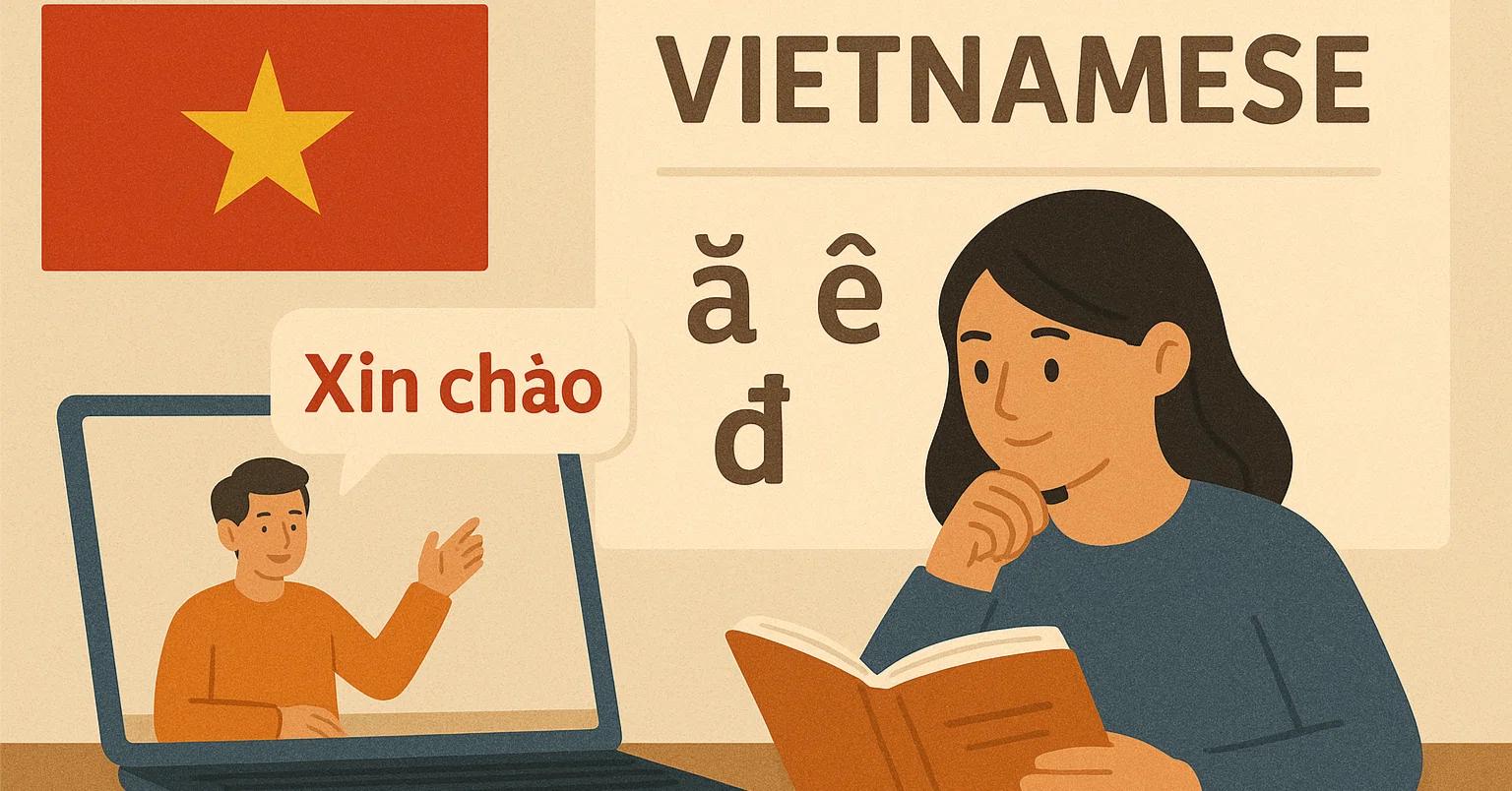
How to Speak Vietnamese Naturally: Practical Tips for Foreign Learners
Many foreigners can read Vietnamese words, understand basic grammar, and memorize plenty of vocabulary. Yet when it comes to real conversations, they often feel nervous or sound overly formal. The reason is simple: speaking naturally is not about knowing more words—it is about learning how Vietnamese is actually used in everyday life.
Natural communication develops through regular practice, listening, and understanding the culture behind the language. Like any language, Vietnamese becomes easier when you focus on meaningful conversations instead of perfect sentences.
1. Learn Everyday Expressions Instead of Individual Words
One of the biggest mistakes beginners make is memorizing long vocabulary lists without learning how native speakers use those words in context.
Instead of studying isolated words, learn complete phrases and common expressions. For example, greetings, polite responses, ordering food, asking for directions, or making small talk are situations you will encounter almost every day.
Learning these expressions helps you respond more quickly and makes your speech sound much more natural than translating directly from your native language.
2. Listen Before You Speak
Speaking naturally begins with listening carefully.
Vietnamese pronunciation, rhythm, and tones are very different from many Western languages. By listening to native speakers through conversations, podcasts, videos, or television programs, learners gradually become familiar with sentence flow and natural pronunciation.
A useful technique is "shadowing"—listening to a sentence and immediately repeating it while copying the speaker's pronunciation, tone, and speed. This improves both fluency and confidence over time.
Many students studying at Hoang Thanh Dieu Language Center develop stronger speaking skills through live online conversations where teachers provide immediate pronunciation corrections and encourage learners to communicate in realistic situations rather than simply memorizing grammar rules.
3. Practice Speaking Every Day Without Fear
Confidence is one of the most important parts of learning Vietnamese.
Many learners hesitate because they are afraid of making pronunciation mistakes or using incorrect grammar. However, communication improves through practice, not perfection.
Try speaking Vietnamese every day, even if only for fifteen minutes. Talk to Vietnamese friends, join online language exchanges, record yourself speaking, or describe your daily activities in Vietnamese.
Remember that native speakers usually appreciate your effort much more than your accuracy. Every conversation is an opportunity to improve, and every mistake teaches you something valuable.
Speaking Vietnamese naturally is not about sounding exactly like a native speaker. It is about expressing your thoughts clearly, understanding others, and enjoying real conversations. As your vocabulary grows and your confidence increases, you will find yourself thinking less about grammar and more about communication.
With patience, daily practice, and consistent exposure to authentic Vietnamese, natural conversation becomes an achievable goal. Every sentence you speak brings you one step closer to connecting with Vietnam's people, culture, and everyday life.