
How to Memorize Vietnamese Vocabulary Faster
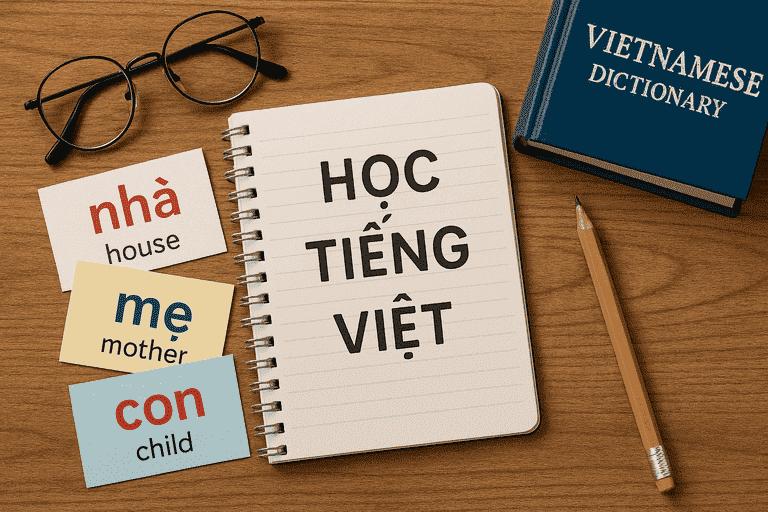
How to Memorize Vietnamese Vocabulary Faster: Smart Learning Strategies for Beginners
One of the biggest challenges for foreigners learning Vietnamese is remembering new vocabulary. Many learners spend hours memorizing word lists, only to forget most of them a few days later. The problem is not a lack of effort—it is often the learning method.
Vocabulary should not be treated as isolated words on a page. Instead, it should become part of your daily communication. When words are connected to real situations and repeated regularly, they become much easier to remember and use naturally.
1. Learn Vocabulary by Topic
Instead of learning random words, organize your vocabulary into practical categories.
For example, study words related to food, transportation, family, shopping, work, travel, or daily routines. When similar words are learned together, your brain naturally builds connections between them.
Rather than memorizing "xe" (vehicle), "đường" (road), and "đi" (go) separately, learn them together through simple travel conversations. This method helps you remember both vocabulary and context at the same time.
2. Use New Words in Real Conversations
Reading vocabulary is only the first step. To truly remember a word, you must use it.
Create short sentences, describe your daily activities, or practice conversations with teachers and language partners. Speaking activates your memory much more effectively than silent reading.
Many students at Hoang Thanh Dieu Language Center practice new vocabulary through interactive online conversations instead of traditional memorization. By using newly learned words immediately, students develop stronger long-term retention and greater speaking confidence.
Another effective technique is to keep a personal vocabulary notebook. Instead of writing only translations, include example sentences, pronunciation notes, and situations where each word is commonly used.
3. Review Frequently and Learn a Little Every Day
One of the most common mistakes beginners make is trying to learn too many words in one study session.
Learning five to ten useful words every day is usually far more effective than memorizing fifty words at once. Regular review is equally important because repetition helps transfer vocabulary from short-term memory into long-term memory.
Flashcards, mobile learning apps, listening exercises, and reading simple Vietnamese stories all provide excellent opportunities to review vocabulary naturally.
You can also label everyday objects in your home with their Vietnamese names. Seeing these words repeatedly throughout the day reinforces memory without requiring extra study time.
Learning Vietnamese vocabulary is not about how many words you can memorize today—it is about how many words you can still remember next month. Consistency always produces better results than intensity.
Every new word you truly understand becomes another building block for confident communication. As your vocabulary grows, conversations become easier, listening improves, and Vietnamese begins to feel less like a foreign language and more like a natural part of your daily life.
The fastest way to remember Vietnamese vocabulary is not to study harder, but to use the language more often. Every conversation, every sentence, and every review session brings you one step closer to speaking Vietnamese with confidence.