
How to Ask for Directions in Vietnamese
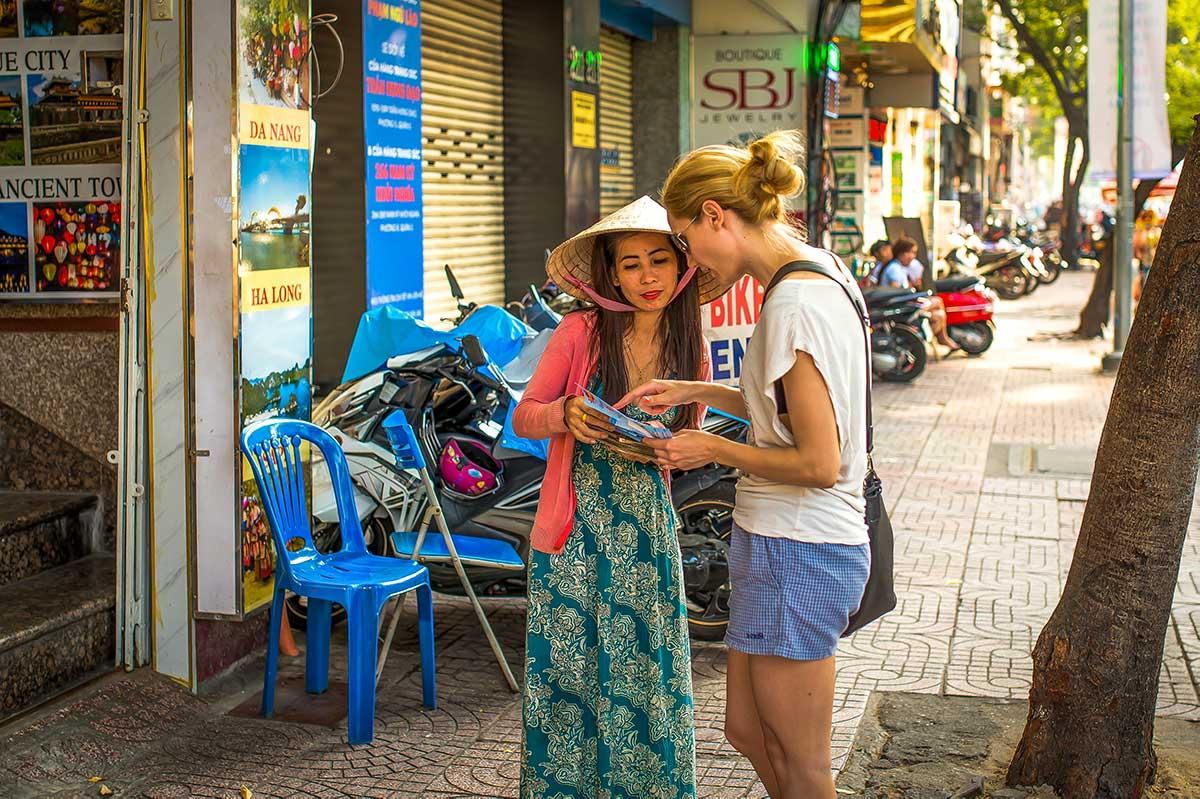
How to Ask for Directions in Vietnamese: Essential Phrases Every Foreigner Should Know
Getting lost in a new country can be stressful, but it can also become a memorable adventure. Whether you're exploring the bustling streets of Ho Chi Minh City, wandering through the ancient town of Hội An, or visiting the peaceful countryside, knowing a few Vietnamese phrases for asking directions can make your journey much easier.
Although many young Vietnamese people speak some English, especially in major cities, using simple Vietnamese expressions often leads to friendlier interactions and a deeper connection with local people. Even a few basic phrases can help you travel more confidently and independently.
1. Basic Phrases for Asking Directions
Before asking for directions, it's polite to begin with a greeting or an apology for interrupting someone.
Here are ten useful phrases:
Xin chào. – Hello.
Xin lỗi. – Excuse me.
Bạn có thể giúp tôi không? – Can you help me?
... ở đâu? – Where is...?
Nhà ga ở đâu? – Where is the train station?
Sân bay ở đâu? – Where is the airport?
Khách sạn này ở đâu? – Where is this hotel?
Nhà vệ sinh ở đâu? – Where is the restroom?
Tôi bị lạc. – I'm lost.
Cảm ơn rất nhiều. – Thank you very much.
These simple expressions are enough for many everyday travel situations.
2. Understanding Common Direction Words
Knowing a few direction-related words will help you understand local answers more easily.
Some important vocabulary includes:
Trái – Left
Phải – Right
Thẳng – Straight
Gần – Near
Xa – Far
Đối diện – Opposite
Góc đường – Street corner
Ngã tư – Intersection
Cầu – Bridge
Bến xe – Bus station
When someone says "Đi thẳng rồi rẽ trái" ("Go straight, then turn left"), you'll be able to follow the instructions with confidence.
Many learners at Hoang Thanh Dieu Language Center practice these travel conversations during live online classes. Instead of memorizing vocabulary lists, students role-play real situations such as asking for directions, taking a taxi, checking into hotels, and shopping at local markets.
3. Practice Makes Travel Easier
Learning phrases is only the beginning. To remember them, practice speaking aloud every day. Read dialogues, repeat after native speakers, or role-play travel situations with a teacher or language partner.
Listening to Vietnamese conversations also improves your ability to recognize common expressions and understand different speaking speeds.
Most importantly, don't be afraid to ask for help. Vietnamese people are known for their friendliness and hospitality. Even if your pronunciation isn't perfect, locals usually appreciate your effort and are happy to guide you.
Learning how to ask for directions in Vietnamese is more than a travel skill—it's a way to experience Vietnam more confidently and authentically. Every conversation helps you improve your language ability while creating meaningful interactions with the people you meet along the way.
Sometimes, a simple question like "Ở đâu?" can lead not only to the right destination but also to unforgettable travel experiences.